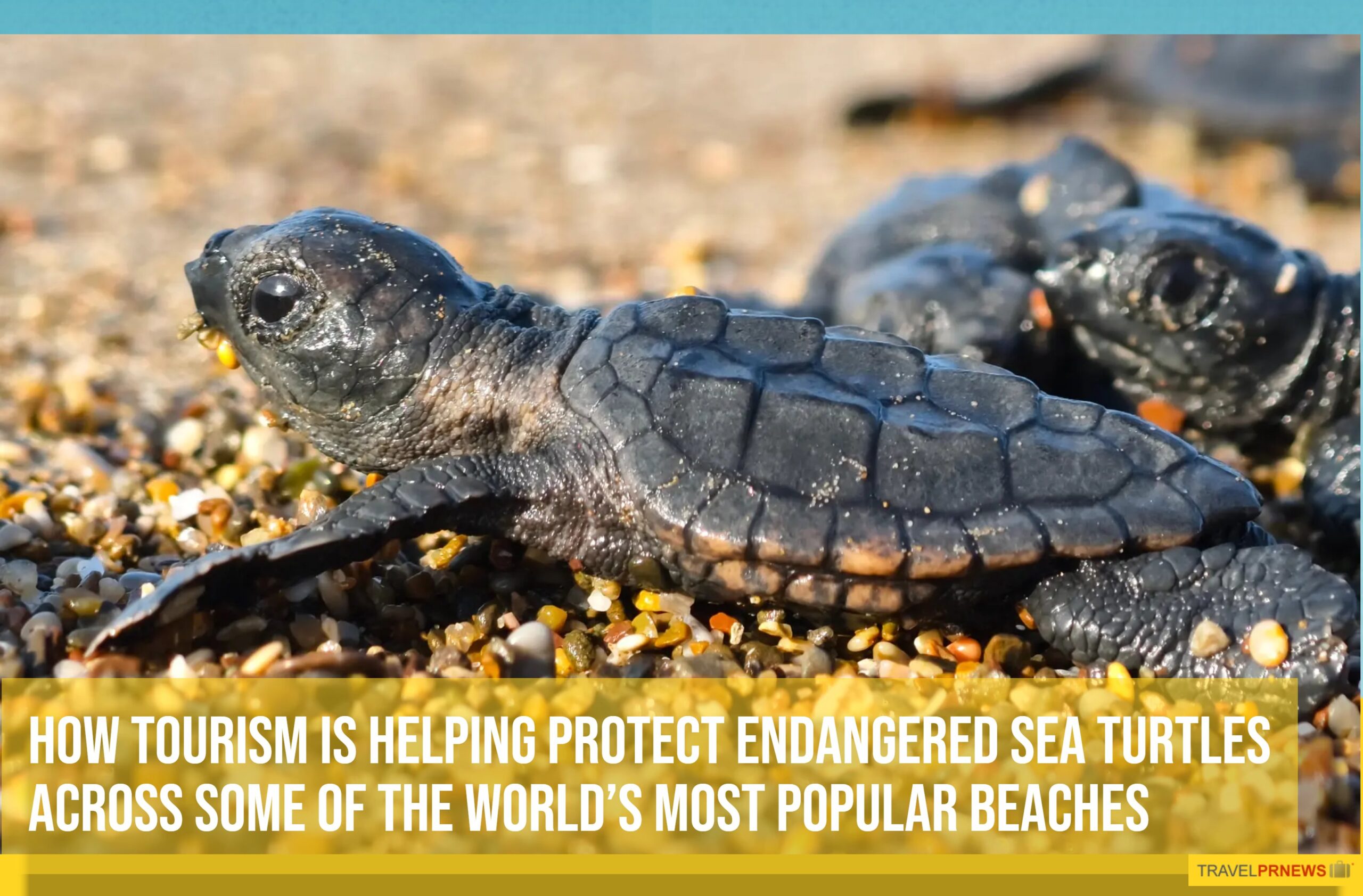
(NEWS) BERLIN, Germany, 2026-May-29 — /Travel PR News/ — As sea turtle nesting season begins across many of the world’s coastal destinations, conservationists are facing a growing challenge. Expanding tourism infrastructure, coastal lighting, plastic pollution, climate change, and habitat disruption continue to place pressure on some of the planet’s most vulnerable marine species.
Yet tourism itself is increasingly becoming part of the solution.
Over the past decade, the TUI Care Foundation has been working with conservation partners across popular holiday destinations to protect nesting beaches, support hatcheries, and engage both local communities and visitors in marine conservation efforts. According to a press release published by TUI Group, its TUI Turtle Aid programme has helped protect more than 2.8 million sea turtle hatchlings worldwide since its launch in 2016.
The milestone comes as the organisation launches a new turtle-friendly certification programme designed to encourage greater participation from the hospitality sector in protecting coastal nesting habitats.
Sea turtles are among the most endangered marine species globally. Across many tourism destinations, nesting beaches overlap directly with resort developments, beachfront infrastructure, and recreational activities. Artificial lighting can disorient hatchlings, coastal construction can damage nesting sites, and increased human activity can create additional threats during breeding seasons.
The TUI Turtle Aid programme operates in several key nesting destinations, including Cabo Verde, Greece, Türkiye, and Italy, where conservation teams work to improve survival rates through nest monitoring, hatchery operations, community education, and direct protection measures.
One of the programme’s most extensive projects has taken place on the island of Sal in Cabo Verde. During a three-year phase running from 2023 to 2025, conservation teams protected more than 78,000 turtle nests. Nearly 5,800 of those nests were relocated to protected hatcheries, helping more than 306,000 hatchlings safely reach the ocean. Conservation teams also used drone technology and night patrols to monitor nesting females and reduce threats along the island’s beaches. According to the foundation, these efforts contributed to a 62 percent reduction in turtle mortality since 2022.
Beyond direct conservation work, education has become a major part of the initiative. More than 71,000 visitors have participated in awareness activities ranging from hatchery tours and nest excavations to hotel-based presentations and conservation exhibitions. Local schools and youth programmes have also been integrated into the project to strengthen long-term environmental awareness.
The newly launched turtle-friendly certification programme aims to expand that impact by involving tourism businesses more directly.
The certification recognises hotels and beachfront properties that actively reduce their environmental impact on sea turtle habitats through measures such as adapting outdoor lighting, protecting nesting areas, and providing staff training on conservation practices.
The first group of certified properties includes twelve hotels across Greece and Türkiye, reflecting a growing recognition within the tourism industry that environmental stewardship is becoming an increasingly important component of destination management.
Among the recognised hotels are Aquila Rithymna Beach Hotel, Euphoria Resort, Crystal Paraiso Verde Resort & SPA and Robinson Club Nobilis.
The initiative forms part of the foundation’s wider “Marine May” campaign, which highlights projects focused on ocean preservation and sustainable marine tourism.
Across the global travel sector, marine conservation is becoming a growing priority as destinations seek to balance visitor demand with the protection of fragile ecosystems. Programmes that combine tourism, conservation, education, and community engagement are increasingly viewed as a practical model for preserving biodiversity while maintaining the economic benefits tourism brings to coastal regions.
For sea turtles, whose survival depends on the continued protection of nesting beaches around the world, such collaborations may prove increasingly important in the years ahead.
(NEWS) SEOUL, South Korea / TOKYO, Japan, 2026-May-29 — /Travel PR News/ — In East Asia,…
(IN SHORT) KLM and Royal Schiphol Group have signed the final agreement for the relocation…
(NEWS) DÜSSELDORF, Germany, 2026-May-29 — /Travel PR News/ — Airlines often promote their employees as the…
(IN SHORT) TAP Air Cargo, the cargo division of TAP Air Portugal, has joined Pharma.Aero’s…
London, UK, 2026-May-29 — /Travel PR News/ — South Africa’s Kruger National Park is set…
(IN SHORT) Air New Zealand and Singapore Airlines are expanding their joint New Zealand-Singapore network…