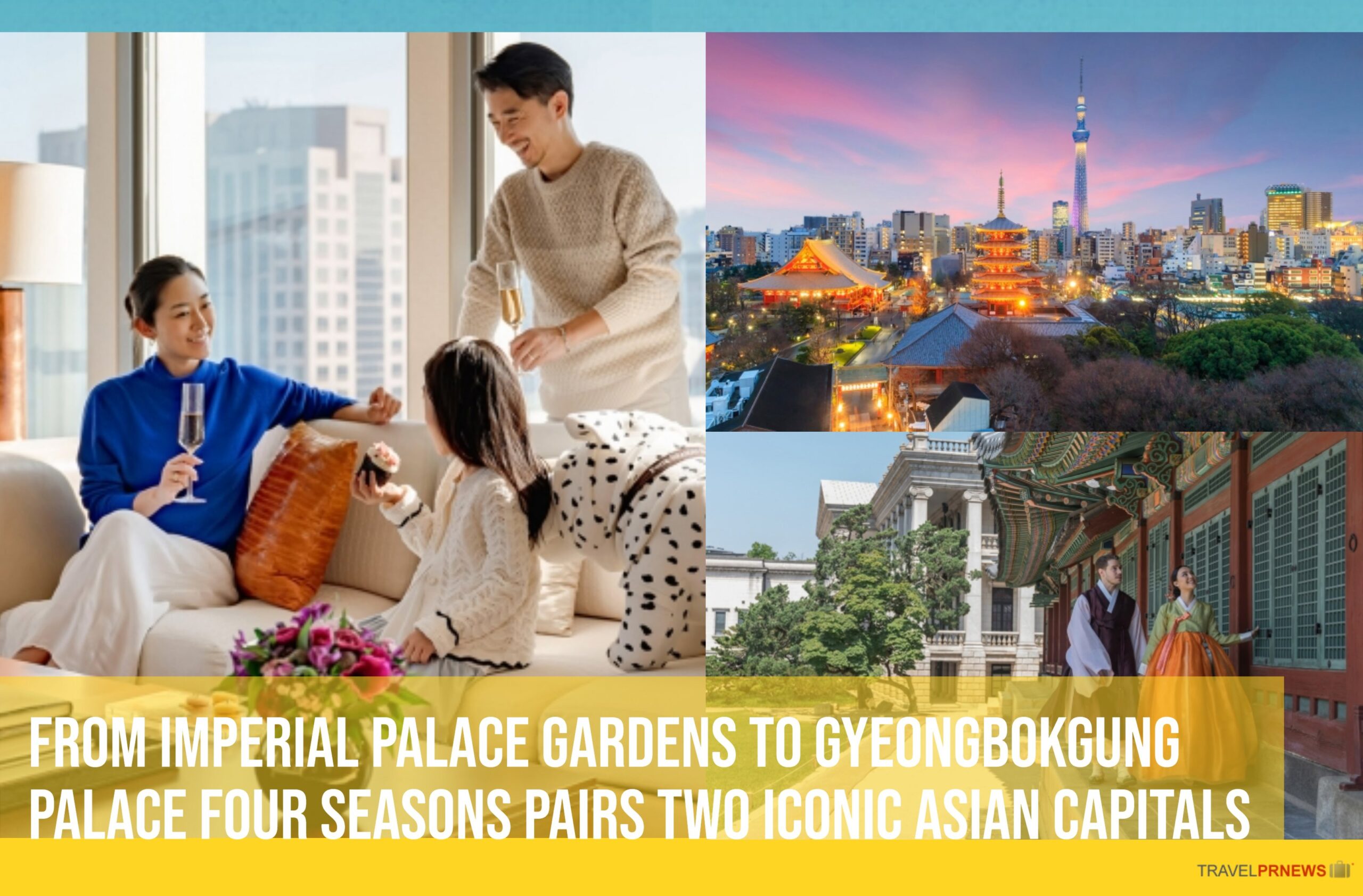
(NEWS) SEOUL, South Korea / TOKYO, Japan, 2026-May-29 — /Travel PR News/ — In East Asia, the distance between Tokyo and Seoul is short enough for a simple flight, but the experience of moving between the two cities can feel like crossing between two very different versions of modern urban life.
Tokyo draws visitors into a world of precise rituals, layered neighbourhoods, contemporary design, historic shrines, Michelin-starred dining, and quietly ordered energy. Seoul, by contrast, moves at a different rhythm — shaped by royal palaces, K-pop culture, K-beauty districts, mountain trails, late-night shopping, traditional hanok lanes, and a creative scene that continues to influence global travel and lifestyle trends.
Now, Four Seasons Hotels and Resorts is pairing the two capitals through a new dual-city travel offer designed for guests looking to experience both destinations in one coordinated journey. According to a press release published by Four Seasons Hotels and Resorts, the “Tokyo to Seoul, Perfectly Placed” package is available until September 30, 2026, and combines stays at Four Seasons Hotel Tokyo at Otemachi and Four Seasons Hotel Seoul with hotel credits and ground transfers included.
The offer reflects a growing trend in high-end urban travel, where visitors increasingly want to combine major cities within a single itinerary rather than treating them as separate trips. For travelers already flying long-haul to Asia, pairing Tokyo and Seoul offers an efficient way to explore two of the region’s most influential capitals without adding the complexity of a wider multi-country tour.
The structure is straightforward: guests booking at least two consecutive nights at each hotel receive USD 100 in hotel credit per stay at both properties, along with one-way airport transportation to or from each hotel. Itineraries can begin in either city, allowing travelers to shape the journey around flight schedules, personal interests, and preferred travel pacing.
In Tokyo, the experience is anchored by Four Seasons Hotel Tokyo at Otemachi, which rises above one of the capital’s most important business and political districts beside the Imperial Palace Gardens. The hotel combines panoramic city views with a strong focus on contemporary Japanese design, curated art, and destination-led dining. Its Michelin-starred French restaurant est and VIRTÙ bar, ranked among The World’s 50 Best Bars, help position the property as a culinary and social address as much as a luxury hotel.
The surrounding Otemachi area gives travelers access to a layered version of Tokyo. Walks around the Imperial Palace moats provide a quieter counterpoint to the city’s commercial energy, while nearby shrines, government districts, business towers, and historic neighbourhoods offer a sense of how old and new Tokyo sit side by side. From there, visitors can move easily toward Asakusa’s temples and traditional streets, Ginza’s polished retail avenues, or the city’s more contemporary cultural districts.
In Seoul, Four Seasons Hotel Seoul places guests in the historic Gwanghwamun district, within walking distance of Gyeongbokgung Palace and close to the city’s major cultural landmarks. The hotel combines contemporary interiors, Korean design references, a strong art collection, and eight restaurants and bars, including Michelin-starred Yu Yuan and the speakeasy-style Charles H. bar.
The location also gives travelers a direct route into Seoul’s contrasting identities. Days can move from palace visits and expert-led tours of the Joseon era to contemporary fashion and beauty experiences in Seongsu, cafés and galleries in Insadong, late-night shopping in Dongdaemun, and hikes on nearby Bugaksan Mountain. After exploring the city, guests can return to the hotel’s wellness facilities, including a modern interpretation of Korean sauna culture.
Together, the two hotels frame Tokyo and Seoul not as competing city breaks, but as complementary destinations. One offers a view into Japan’s precise balance of ceremony, design, and innovation; the other captures South Korea’s fast-moving mix of heritage, pop culture, beauty, food, and technology.
For Four Seasons, the dual-city offer also reflects how luxury hospitality brands are increasingly curating travel beyond the walls of individual hotels. Rather than simply selling rooms, they are designing linked experiences that help guests navigate culturally rich cities with greater ease and continuity.
As Asian city travel continues to grow among international visitors, Tokyo and Seoul remain two of the strongest examples of how modern capitals can preserve deep cultural identity while constantly reinventing themselves. Experienced together, they offer a broader picture of East Asia’s urban future — one shaped by history, design, cuisine, wellness, entertainment, and daily rituals that reward slow attention.
(IN SHORT) KLM and Royal Schiphol Group have signed the final agreement for the relocation…
(NEWS) DÜSSELDORF, Germany, 2026-May-29 — /Travel PR News/ — Airlines often promote their employees as the…
(IN SHORT) TAP Air Cargo, the cargo division of TAP Air Portugal, has joined Pharma.Aero’s…
London, UK, 2026-May-29 — /Travel PR News/ — South Africa’s Kruger National Park is set…
(IN SHORT) Air New Zealand and Singapore Airlines are expanding their joint New Zealand-Singapore network…
(NEWS) MADRID, Spain, 2026-May-28 — /Travel PR News/ — Travel companies are spending billions each year…