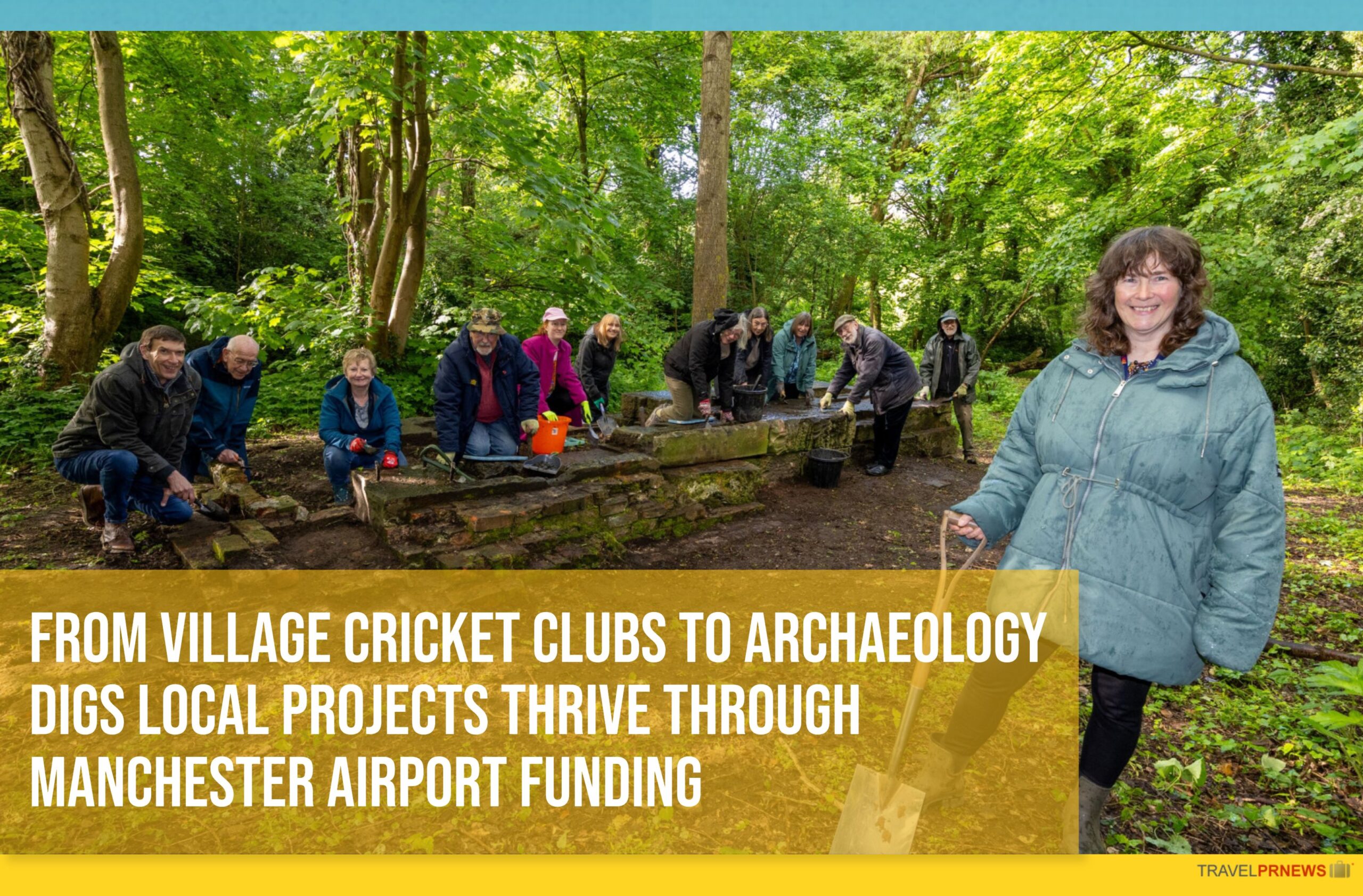
(NEWS) MANCHESTER, UK, 2026-May-18 — /Travel PR News/ — On a quiet patch of woodland in Cheadle, a group of amateur archaeologists is preparing to dig into the remains of a forgotten medieval mill. Not far away, children facing emotional and educational challenges are learning through animal-assisted therapy sessions in rural Tameside. In nearby village cricket clubs, community volunteers are repairing kitchens, replacing worn-out equipment, and trying to keep small local institutions alive for another generation.
None of these projects are particularly grand in scale. Yet together, they paint a revealing portrait of the communities surrounding Manchester Airport — places where local identity is often built not through major landmarks, but through volunteer-run clubs, grassroots charities, libraries, church halls, sports pavilions, and community centers that quietly anchor everyday life.
This spring, more than 20 of those organizations received new financial backing through the airport’s long-running Community Trust Fund, which pledged over £30,000 during its latest quarterly funding round. According to a press release published by Manchester Airport, the initiative has now distributed more than £4 million to local causes since it was established in 1997.
For travelers arriving through Manchester — often focused on departures boards, holiday itineraries, or international connections — it can be easy to overlook the network of towns, suburbs, and villages that surround one of the UK’s busiest airports. Yet within a 10-mile radius of the terminals lies a diverse patchwork of communities where the airport’s economic and social footprint stretches far beyond aviation itself.
This year’s grants reveal how varied those local needs can be.
At the Higher Mill Wood site in Cheadle, the South Manchester Archaeological Research Team received funding to purchase equipment for an upcoming excavation. The group invites local residents and hobbyists to participate directly in archaeological digs, transforming local history into something tactile and communal rather than confined to museum displays.
Elsewhere in Tameside, Inspiring Animal Therapy CIC secured support for digital equipment used in sessions with young people dealing with bereavement, anxiety, anger management, and special educational needs. The organization combines therapeutic work with hands-on interaction involving trained animals — an approach increasingly embraced across parts of the UK for its ability to build confidence and communication skills in children who often struggle in traditional classroom environments.
In the Cheshire village of Rostherne, meanwhile, the local cricket club’s application focused on something less emotionally dramatic but equally essential to village life: upgrading kitchen facilities inside the club pavilion. In many rural English communities, cricket grounds continue to serve as informal social hubs long after matches end, hosting gatherings, local events, and fundraising activities that help sustain village life itself.
The same sense of practical local investment runs throughout the wider funding list. Community kitchens received support for appliances and equipment. Libraries secured funding for picnic tables and compost bins. Churches upgraded seating and café spaces. Sports clubs invested in kits, training equipment, and accessibility improvements. A Ukrainian community support organization received assistance for radio broadcasting equipment, while nature-learning initiatives, podcast projects, and disability support groups also appeared among this year’s recipients.
Taken together, the projects offer a snapshot of modern community life across Greater Manchester and Cheshire — multicultural, volunteer-driven, and increasingly reliant on small but meaningful injections of support to remain sustainable.
For airports across Europe, local community engagement has become an increasingly important part of balancing growth ambitions with public scrutiny over noise, traffic, environmental pressures, and land use. Many large airports now position themselves not only as transport hubs but as long-term regional stakeholders whose success depends partly on maintaining strong relationships with neighboring communities.
Manchester Airport’s trust fund reflects that wider shift. Overseen jointly by airport staff and representatives from surrounding councils, the program focuses specifically on projects expected to create long-lasting community benefits rather than one-off events or short-term initiatives. Grants of up to £3,000 are awarded quarterly.
For visitors passing through Manchester — whether heading to the Lake District, North Wales, the Peak District, or the city’s growing cultural scene — these quieter local stories are rarely visible from the departure lounge. Yet they form part of the broader ecosystem surrounding major travel infrastructure: the communities that provide workers, preserve local heritage, sustain village traditions, and create the lived character of the region itself.
And while airport expansion projects often dominate headlines, the smaller stories unfolding around them — a restored cricket pavilion, a digital whiteboard for children with learning disabilities, an archaeological dig uncovering fragments of local history — can sometimes say far more about the places travelers are moving through.