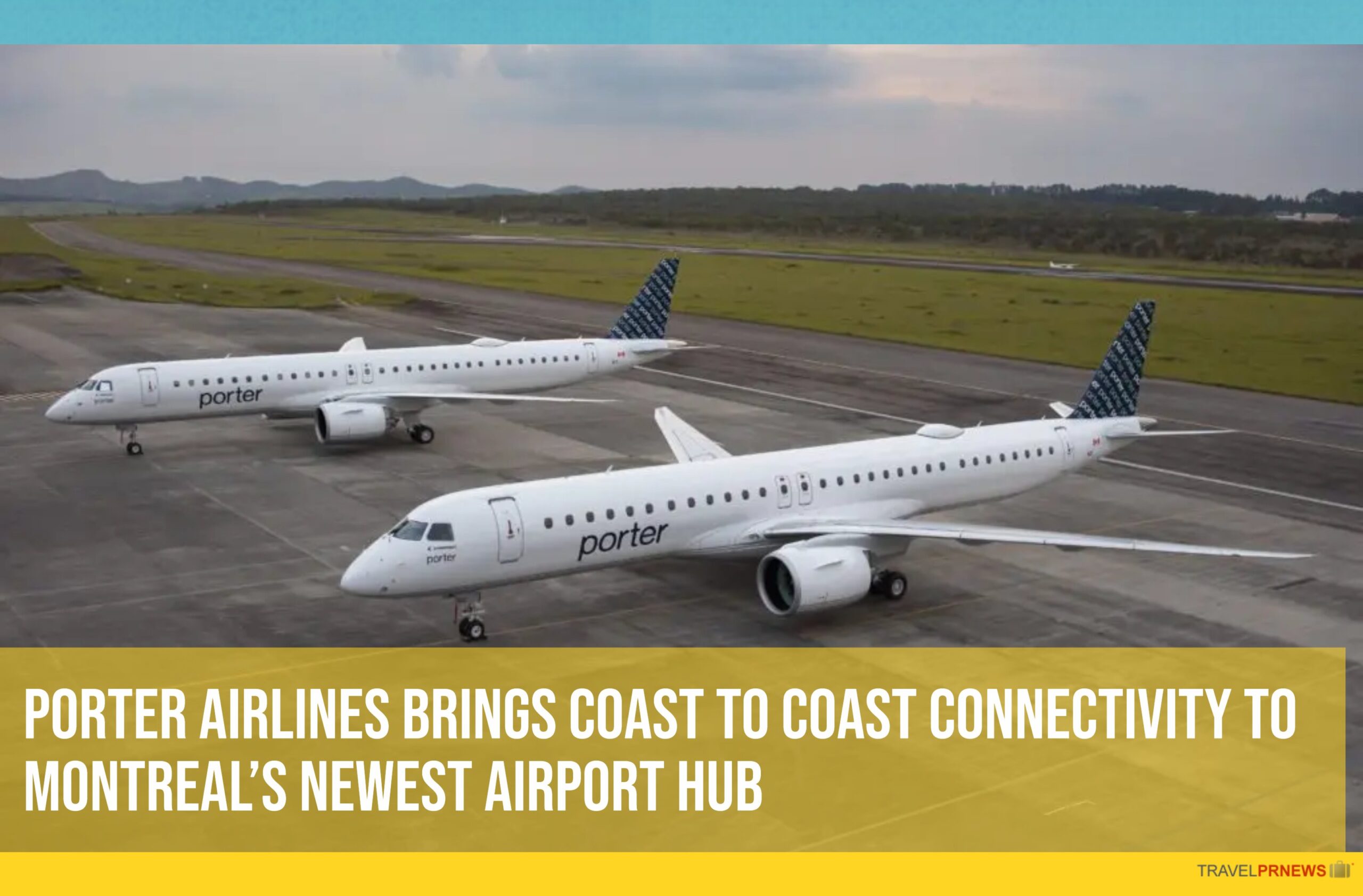
(NEWS) LONGUEUIL, QC, 2026-Mar-24 — /Travel PR News/ — A new chapter in Montreal’s aviation landscape is set to begin this summer, as Porter Airlines prepares to anchor operations at the newly developed Montreal Metropolitan Airport, introducing a coast-to-coast network that positions the airport as a fresh alternative to traditional gateways.
From June 15, the airline will roll out 12 nonstop routes across Canada, linking Montreal’s South Shore to destinations spanning from Vancouver to St. John’s. The move signals a broader shift in how air travel is being structured in the region—combining expanded connectivity with a redesigned airport experience aimed at reducing congestion and simplifying the passenger journey.
A different kind of airport experience
Located in Longueuil, the airport—formerly known as Montreal Saint-Hubert—has been reimagined with a focus on efficiency and passenger comfort. The new terminal, developed by YHU Infrastructure Partners, introduces a compact layout and open-concept departure space designed to streamline movement from arrival to boarding.
According to project stakeholders, the design aims to reduce travel friction by shortening processing times and allowing passengers to spend more time in relaxed pre-flight environments. For a region where more than half the population can access the airport conveniently, the development offers a new option for travelers seeking an alternative to larger, more complex hubs.
Expanding Montreal’s role as a national hub
Porter’s expansion at the airport represents a significant increase in capacity across the Montreal market. The airline will operate frequent services to key destinations including Toronto, Vancouver, Calgary and Halifax, while also introducing seasonal routes to cities such as Charlottetown and Winnipeg.
The launch complements Porter’s continued presence at Montréal–Trudeau International Airport, giving passengers greater flexibility in choosing departure points while strengthening the airline’s footprint in the region.
The addition of both the Embraer E195-E2 and De Havilland Dash 8-400 aircraft types will support a mix of short- and long-haul domestic routes, enabling the airline to scale its network efficiently while maintaining frequency across key corridors.
A broader vision for regional connectivity
The launch also reflects a growing emphasis on regional integration. Through a partnership with Quebec-based carrier Pascan Aviation, passengers will be able to connect to smaller communities across Quebec and the Maritimes under a single booking, extending the reach of the network beyond major urban centres.
At the same time, the new airport is expected to contribute to local economic growth, supporting tourism and business travel while easing pressure on existing infrastructure in Montreal.
Redefining how travelers move through cities
As airlines and airports look for ways to accommodate rising demand, the development of alternative hubs like Montreal Metropolitan Airport points to a broader trend in aviation—one that prioritizes distributed capacity, simplified passenger flows and more flexible travel options.
With its dual-airport strategy and focus on experience-driven design, Porter’s expansion in Montreal highlights how regional airports can play a larger role in shaping the future of air travel in Canada.
Porter’s expansion at Montreal Metropolitan Airport builds on a broader network growth strategy that has been unfolding across Canada over the past year. Earlier developments included the introduction of new coast-to-coast services from John C. Munro Hamilton International Airport, where the airline launched routes to key cities such as Calgary, Edmonton, Halifax and Vancouver. That expansion, combined with terminal upgrades at Hamilton, reflected a similar approach to pairing new infrastructure with enhanced passenger experience—an approach now being extended to the Montreal market.
Central to this strategy is Porter’s focus on redefining economy travel through a more premium onboard experience. Across its growing network, the airline has introduced features such as no middle seats, complimentary beer and wine served in glassware, and free high-speed Wi-Fi on its Embraer E195-E2 fleet. By combining these service elements with expanding regional airport partnerships, Porter is positioning itself as a carrier that not only increases connectivity across Canada but also differentiates itself through a more comfortable and customer-focused travel experience.