(NEWS) LONDON, 2026-Jan-19 — /Travel PR News/ — London Luton Airport is turning its focus to the future of aviation with the launch of a new competition designed to inspire students across Luton to explore the careers, creativity and skills that keep an airport running every day. Based on details shared in official announcement, the initiative invites young people to step into the world of aviation through hands-on challenges that blend storytelling, innovation and real-world experience.
Open to students in Key Stages 3 and 4 as well as post-16 learners, the competition forms part of the airport’s wider efforts to connect education with employment opportunities in the aviation sector. Rather than focusing solely on flying, the challenges highlight the breadth of roles behind the scenes — from engineering and airport operations to sustainability, customer experience, digital innovation and safety.
For students aged 11 to 15, the brief centres on creativity and community. Entrants are tasked with producing a 90-second video welcoming passengers to London Luton Airport, using storytelling to showcase both the airport and the surrounding area. The winning team will be rewarded with a behind-the-scenes visit to Cranfield University, a globally recognised centre for aerospace and aviation education, offering a rare glimpse into specialist airport and aircraft facilities.
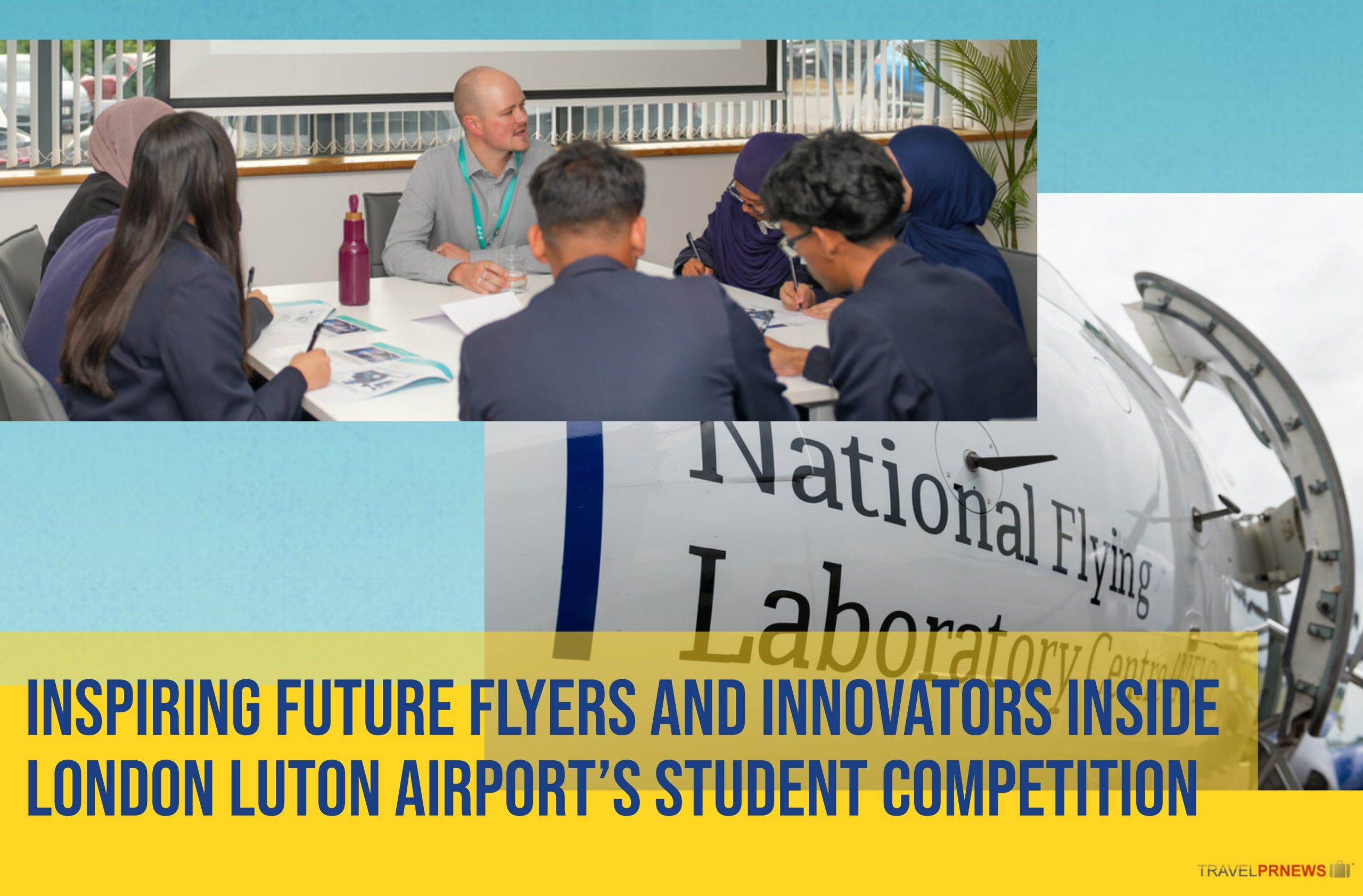
Older students, aged 16 and above, are invited to take on a more strategic challenge by designing an interactive workshop aimed at introducing peers to careers in aviation. The prize reflects the ambition of the task: a flight from London Luton Airport to Cranfield aboard the university’s Saab 340B National Flying Laboratory Centre aircraft, a research plane used exclusively for teaching and consultancy, offering participants a unique perspective on aviation beyond the commercial cabin.
The competition is supported by the Civil Aviation Authority and the Department for Transport’s Reach for the Sky Challenge Fund, following London Luton Airport’s successful £90,000 funding bid to support outreach projects that encourage participation from underrepresented groups. The initiative also sits within the airport’s long-running Classroom to Careers programme, which combines environmental education, apprenticeships, university partnerships and work experience placements to help local students navigate pathways into the industry.
Cranfield University’s involvement strengthens the link between classroom learning and real-world aviation. Through the partnership, students are introduced to the academic, technical and operational sides of air transport, reinforcing the idea that aviation careers extend far beyond the flight deck.
Cranfield University’s role in the initiative also reflects its growing influence in shaping the future of global aviation. The university recently announced a new partnership with Airports Council International (ACI) World to deliver Airport Management in a Net Zero World, a pioneering course under the ACI–ICAO Airport Management Professional Accreditation Program. Hosted at Cranfield’s UK campus, the intensive programme focuses on leadership, climate action and resilience, equipping current and future airport leaders with the skills needed to navigate the industry’s transition toward net-zero operations. Featuring hands-on learning at facilities such as the Digital Aviation Research and Technology Centre and the Cranfield Hydrogen Innovation Centre, the course positions Cranfield as a hub where sustainability, innovation and practical aviation expertise converge — a natural extension of its collaboration with London Luton Airport to inspire the next generation of aviation professionals.
Together, the competition reflects a broader push to ensure the next generation sees aviation as accessible, inclusive and rooted in local opportunity. For London Luton Airport, it is as much about community connection as it is about future skills — encouraging young people to imagine themselves not just as passengers, but as the professionals shaping how airports operate in the years ahead.