Waldorf Astoria Osaka – Grand Entrance – Lobby © 2025 Hilton
(IN SHORT) Waldorf Astoria Osaka, the first in Japan, showcases architect André Fu’s innovative fusion of Art Deco heritage and Japanese craftsmanship. The design integrates Osaka’s historical and modern elements—from a pavilion‑style arrival and monumental art installations to a sky‑high Pavilion lounge and a lantern‑lit rotunda. Dining venues—including Peacock Alley, Canes & Tales, and Jolie Brasserie—blend festival‑inspired chandeliers, marble‑runway bars, and tea‑pavilion aesthetics. All 252 rooms feature kumiko screens, washi panels, bespoke color palettes, and interlocking timbers. The spa’s ryokan‑inspired treatments and minimalist pool provide sanctuary, while 1,000 m² of event spaces—including a Grand Ballroom and vaulted Chapel—offer settings for elegant ceremonies. Situated in the GRAND GREEN OSAKA South Building, the property elevates Waldorf Astoria’s legacy with a design that is both timeless and distinctly Osaka.
(PRESS RELEASE) OSAKA, Japan, 2025-Jul-24 — /Travel PR News/ — The debut of Waldorf Astoria Osaka—the brand’s first property in Japan—marks a milestone in hospitality architecture, seamlessly marrying André Fu’s visionary design with the city’s dynamic heritage. Building on Waldorf Astoria’s storied history—from its iconic New York flagship to celebrated landmarks worldwide—Fu’s concept reinterprets Art Deco elegance through the prism of modern Japanese sensibility.
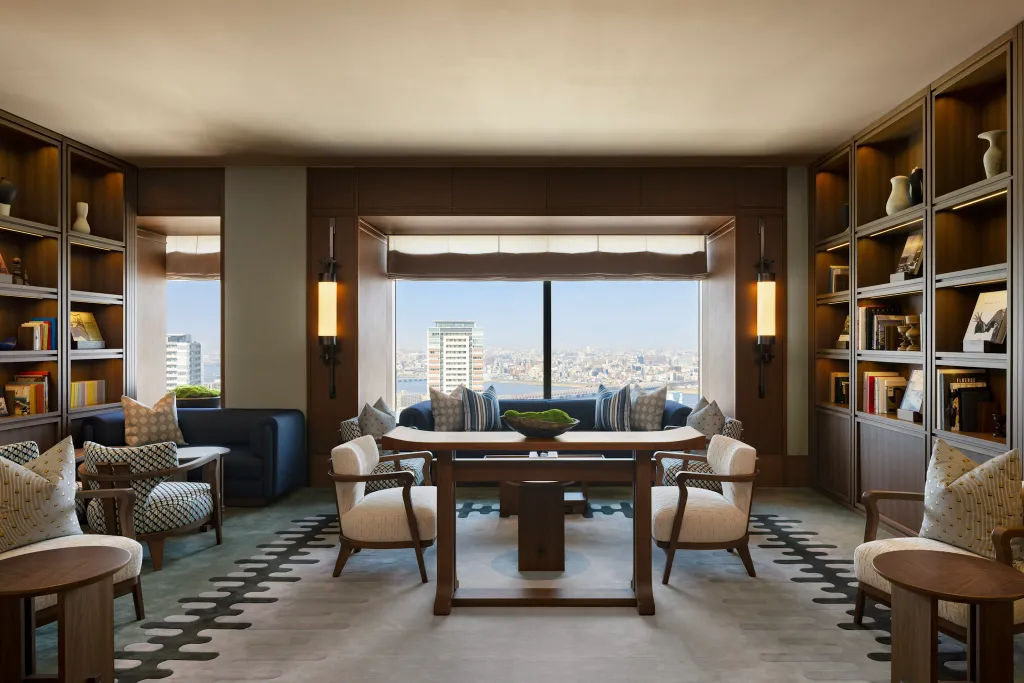
Throughout the hotel, Wa © 2025 Hilton
Fu draws inspiration from Osaka’s historic castles and temples as well as its gleaming towers, harmonizing bold geometric motifs and luxe materials with time‑honored Japanese artisanal techniques. “Waldorf Astoria New York’s enduring style forms the cornerstone of our brand ethos,” explains Fu. “In Osaka, I’ve refreshed Art Deco principles—layering textures, hues, and forms—to craft spaces that feel both intrinsically local and unmistakably Waldorf Astoria.”
Guests arrive beneath a pavilion‑inspired portico, then pass through a dramatic lobby featuring a Jun Kaneko ceramic installation and Manika Nagare’s vibrant canvas. Ascending to the 29th floor, they encounter The Pavilion—a soaring oak-and-bronze lounge framed by nine‑meter windows—and The Arcade, a timber‑arched corridor culminating in glasshouses with symbolic camellias. At its heart lies The Lantern, a seven‑meter rotunda of vertical timber posts encircling a circular water feature that shifts light into a dreamlike tableau.
Dining and social venues echo Fu’s fusion of eras: Peacock Alley flows beneath festival‑inspired chandeliers and a four‑sided bronze clock; Canes & Tales channels speakeasy charm with marble runway‑bars and hand‑painted Osaka maps; and Jolie Brasserie reimagines the French salon as a sky‑high tea pavilion with oak, leather, mosaic floors, and brass accents.
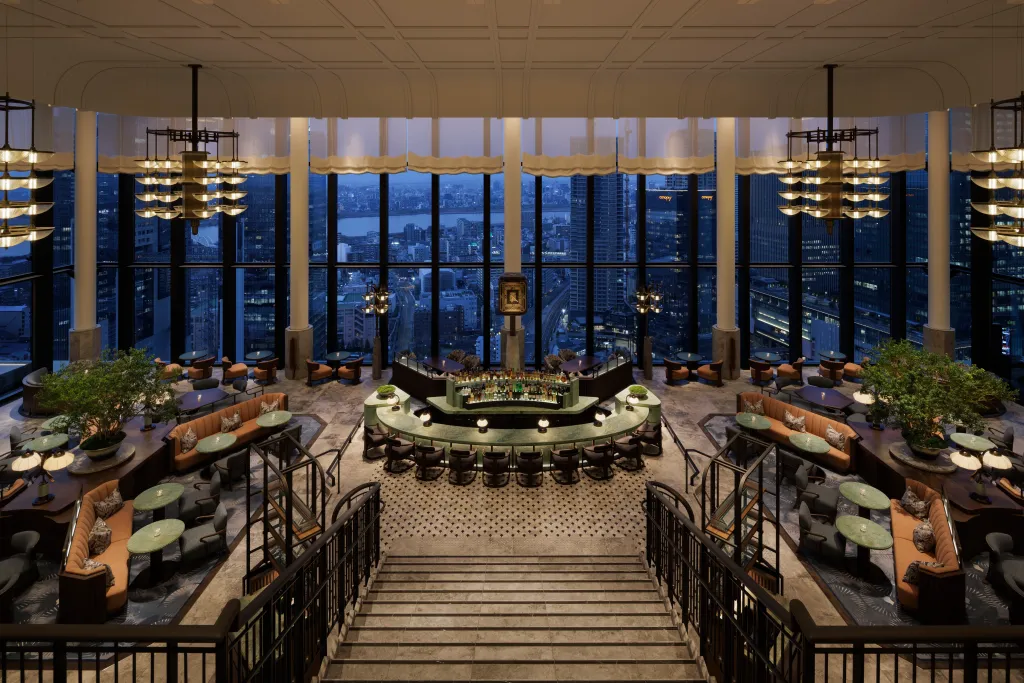
Waldorf Astoria Osaka – Peacock Alley at Night © 2025 Hilton
All 252 guestrooms continue this narrative, pairing kumiko screens, washi‑painted panels, and interlocking timbers with a rich palette of sage, indigo, caramel, and cobalt—each element reflecting shifting daylight. In the spa, mud‑paint walls, shoji detailing, and a diamond‑shaped layout evoke Japanese ryokans, culminating in a minimalist pool crowned by a pitched roof “sky bungalow.”
For gatherings, roughly 1,000 m² of event space includes a Grand Ballroom of poetic proportions and The Chapel—a 9.5‑meter vaulted sanctuary with floating‑candle chandeliers—ideal for weddings and celebrations.
More than a hotel, Waldorf Astoria Osaka stands as an architectural beacon, where André Fu’s meticulous layering of Art Deco grandeur and Japanese craftsmanship creates a truly immersive environment. Located in GRAND GREEN OSAKA South, 5‑54 Ofuka‑cho, Kita‑ku, Osaka 530‑0011, Japan, it redefines luxury hospitality in one of Asia’s most vibrant metropolises.
Media Contact:
Daphne Tan
Hilton – Asia Pacific
daphne.tan@hilton.com
SOURCE: Hilton