(NEWS) BANGKOK, Thailand, 2026-Mar-31 — /Travel PR News/ — International travel across Asia Pacific is expected to move beyond its post-pandemic recovery phase in the coming years, but new forecasts suggest the pace of growth will be shaped by a more uncertain global environment.
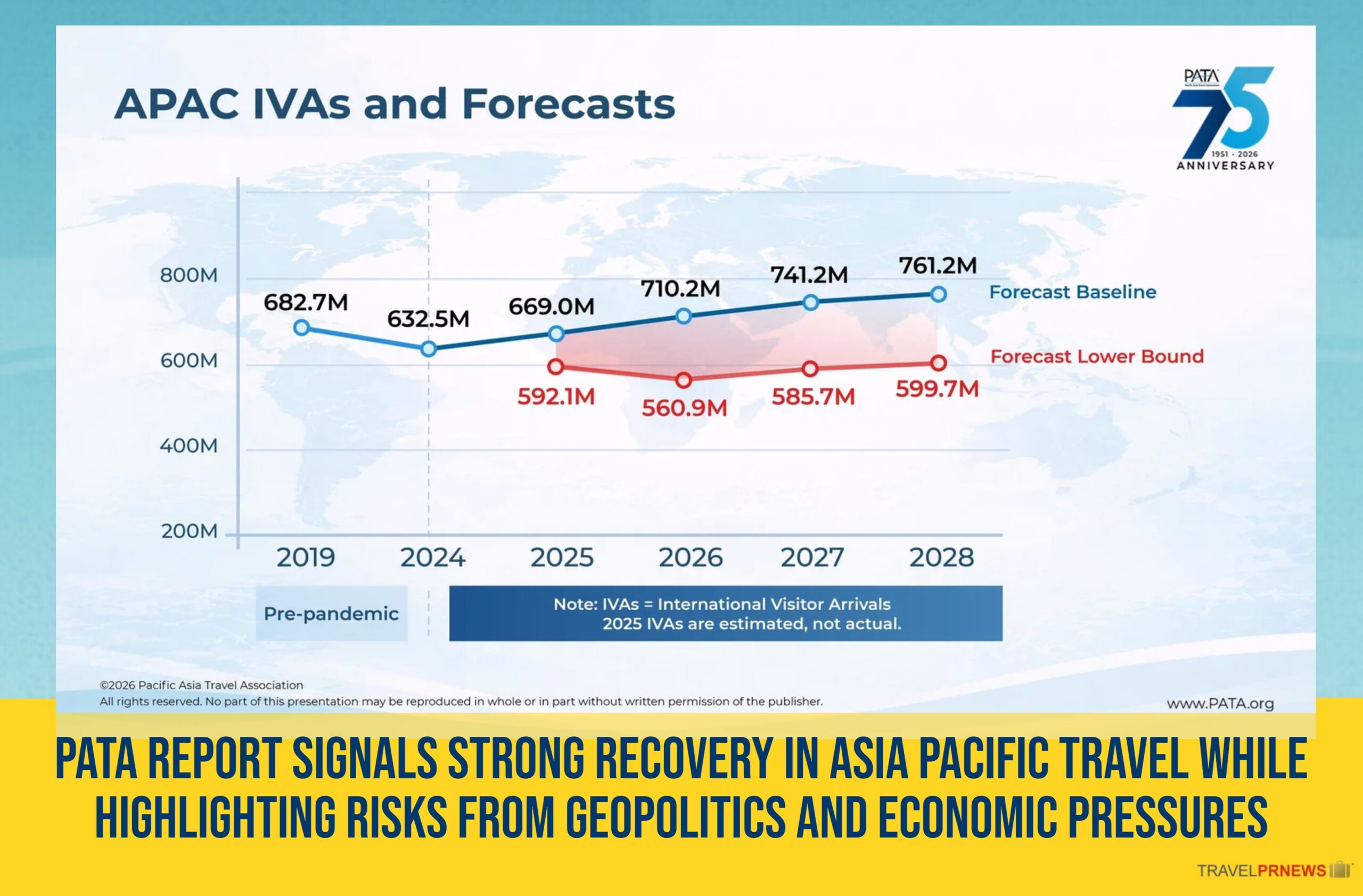
The Pacific Asia Travel Association (PATA) has released its latest visitor projections for 2026 to 2028, indicating that inbound arrivals to the region could surpass pre-2019 levels as early as 2026. Under its baseline scenario, international arrivals are forecast to reach 761.2 million by 2028, signalling continued momentum across key destinations.
However, the report also outlines a more cautious scenario. According to details shared by PATA, ongoing geopolitical tensions, economic volatility, and external disruptions could limit growth, with arrivals reaching 599.7 million by 2028 — equivalent to around 88% of pre-pandemic levels. The dual-scenario approach reflects what industry analysts describe as a more complex and less predictable phase for global tourism.
The forecasts were developed in collaboration with the The Hong Kong Polytechnic University, drawing on modelling across 39 destinations in the Asia Pacific region. The findings highlight an uneven recovery landscape, with performance varying widely between markets depending on factors such as air capacity, policy frameworks, and regional demand patterns.
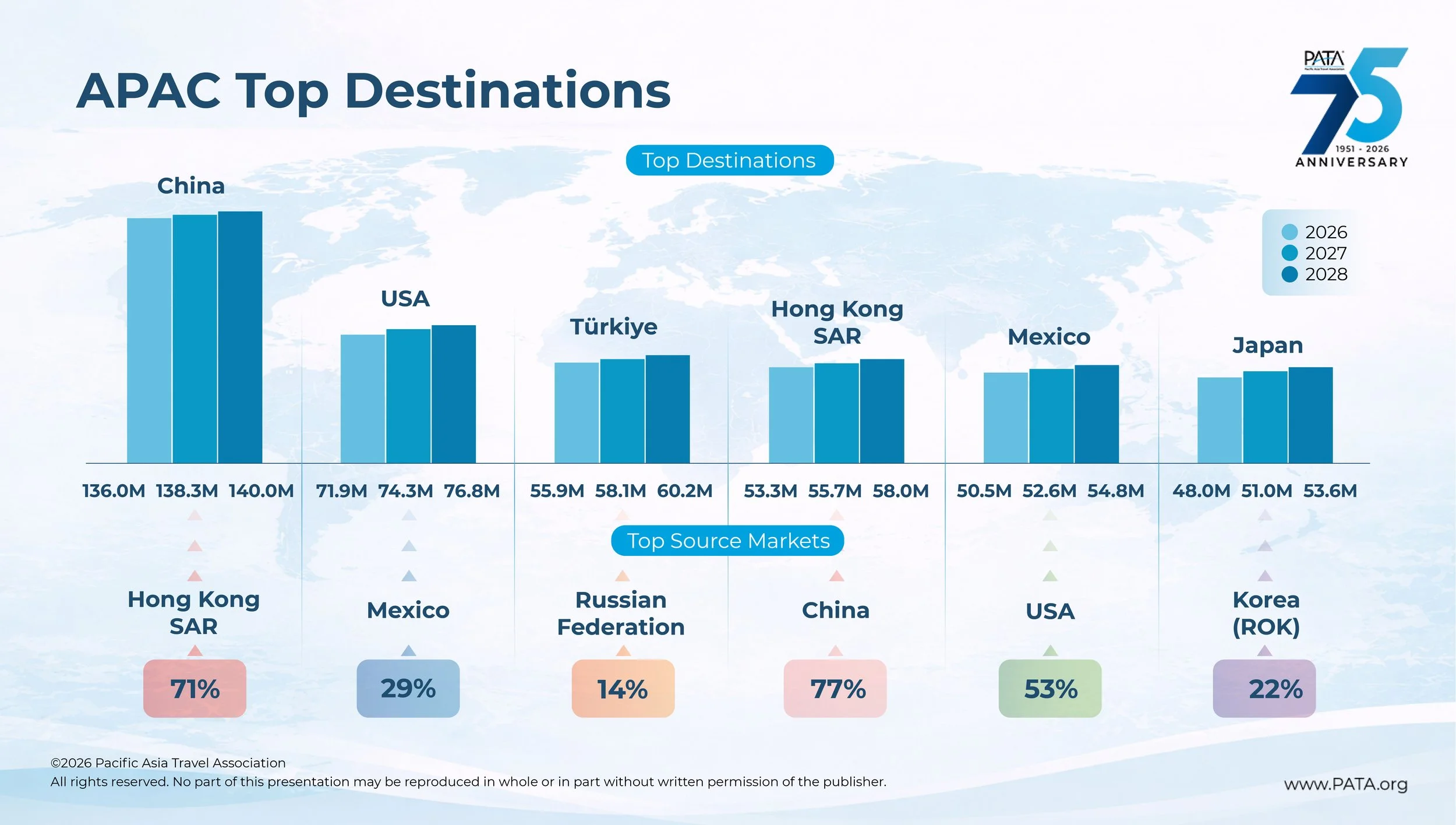
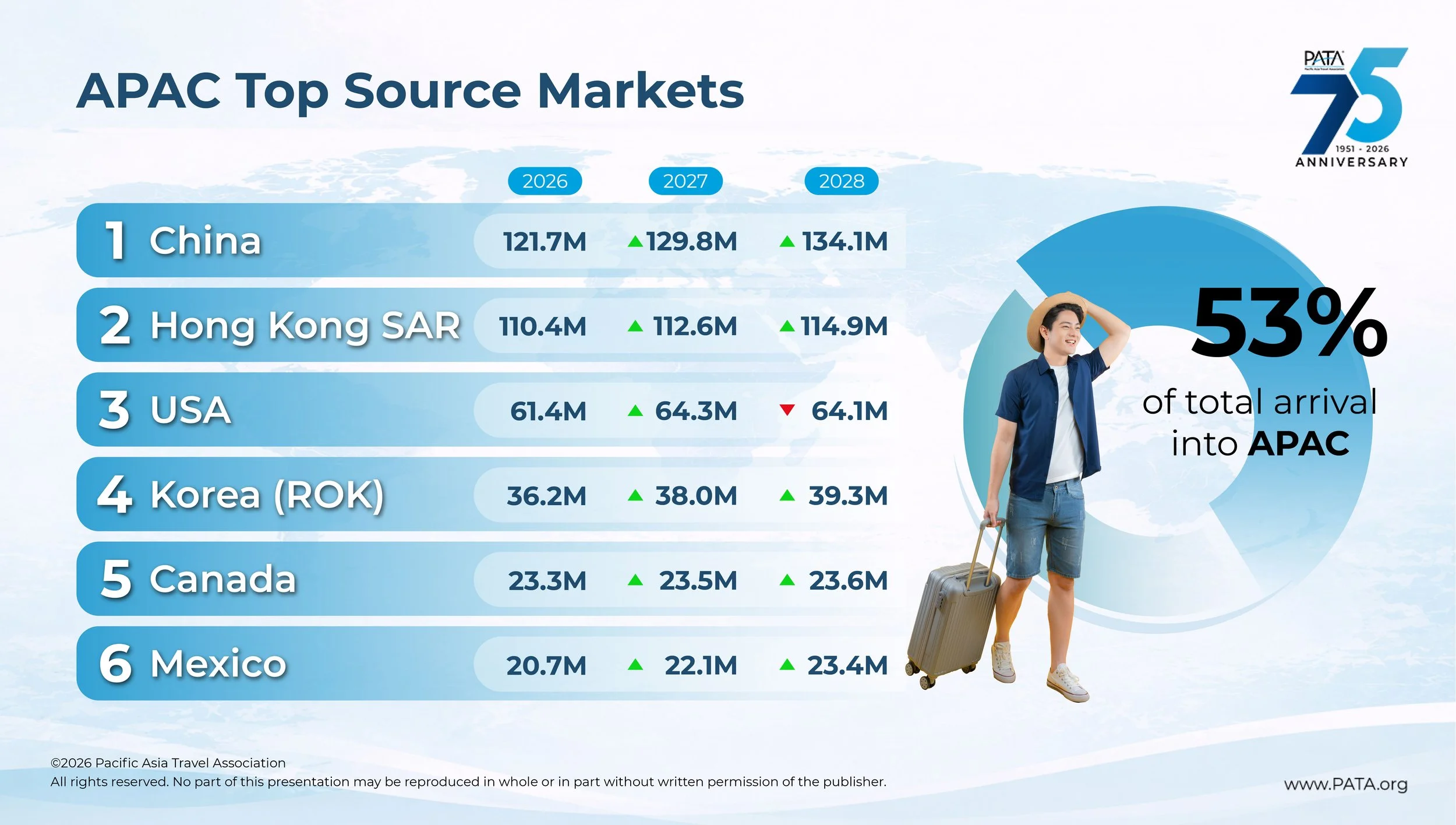
Among the key trends identified, major destinations including China, United States, and Türkiye are expected to remain dominant through 2028, while source markets such as China, Hong Kong SAR, the United States, and South Korea continue to play a central role despite ongoing cost pressures and capacity constraints.
At the same time, several destinations are showing stronger-than-expected recovery trajectories. Countries including Japan, Mongolia, Chile, Maldives, and Sri Lanka are projected to exceed 150% of their 2019 arrival levels, reflecting shifting travel patterns and renewed demand in specific markets.
More broadly, the report points to structural changes shaping the tourism economy, including the growing influence of digital technologies, evolving visa and aviation policies, and increasing exposure to climate-related disruptions. These factors, combined with geopolitical uncertainty, are expected to contribute to a more fragmented and non-linear growth trajectory across the region.
Industry stakeholders are being encouraged to adapt to this environment by diversifying source markets, strengthening collaboration between public and private sectors, and relying more heavily on real-time data to inform decision-making.
While the outlook remains broadly positive, with 27 of the 39 destinations expected to exceed pre-pandemic arrival volumes by 2028, the report underscores a shift in how growth is understood — less as a steady upward trend, and more as a dynamic process shaped by risk, resilience, and the ability to respond quickly to change.
(IN SHORT) KLM and gategroup have agreed on a proposed deal in which gategroup will…
(IN SHORT) ACI World has opened submissions for the 2026 Airport Innovation Awards, inviting airports…
(IN SHORT) Shannon Airport expects over 132,000 passengers during the Easter period, marking a 7%…
(IN SHORT) Marriott International has announced a joint venture with the Leali family to bring…
(IN SHORT) The Lufthansa Group is expanding its summer 2026 flight schedule by adding around…
WORCESTER, MA, 2026-Mar-31 — /Travel PR News/ — Wondering how people conveniently bring their babies…